Bears Ears Education Center - Bluff, UT
August 26th and 27th
Jump to:
Travel the World and the Solar System - Summer Night Sky Tour - Artemis & Apollo Resources
Moon Activities -The Sun - Cloudy Night Program Resources - 3D Prints & Sonifications
Bluff Session Recordings/Resources - Other Relevant ETS Presentations
SE Utah Specific Color-a-Pixel Files
Welcome!
Thank you for joining us to share how the landscape of southeast Utah helps us better understand ourselves and our universe! Earth to Sky is a community of practice collaborative community of practice that connects NASA science with the incredible work of interpreters, park rangers, and informal educators like you.
We recommend that you register for an account on the Earth to Sky website (it's free!) so that you can access resources and recordings that were mentioned during the training. This webpage is the landing spot for all the resources that we shared. If we've missed something or you need additional help, please reach out!
In "A Sense of Place in Space: Gazing Up in Southeast Utah," we explored the connections between the canyons, mountains, waters, and dark skies to our cosmos. Through hands-on sessions, we demonstrated interpretive techniques for solar viewing and safely exploring the Sun with visitors. We observed the Moon and discuss what we learned from the Artemis II mission on society's connection to the Moon. We shared ideas on how to draw parallels from the ground to the sky--how this place serves as a planetary analogue for other locations within our solar system. We brainstormed how to integrate NASA data and resources into your storytelling. And we helped you build a low-tech toolkit to engage visitors with the cosmos, even on cloudy nights.
Note
There was a lunar eclipse on the evening of Thursday, August 27th. The prenumbral eclipse will begin around 8:00 pm, and there will be noticeable changes in the Moon's appearance around 8:30 pm.
Resources
Travel the World and Solar System
- Visually explore the past and the present of this dynamic planet from a satellite's perspective. Select from an array of stories below to learn more about Worldview (a part of NASA Earthdata), the satellite imagery, and events occurring around the world.

- Experience Earth, our solar system, nearby asteroids, the universe, and the spacecraft exploring them with immersive real-time 3D web-based apps. Start exploring your solar system now! (Great for cloudy nights!)
Visions of the Future Travel Posters
- A creative team of visual strategists at JPL, known as "The Studio," created the poster series, which is titled "Visions of the Future." Nine artists, designers, and illustrators were involved in designing the 14 posters, which are the result of many brainstorming sessions with JPL scientists, engineers, and expert communicators. Take a virtual trip to alien worlds, and maybe even plaster your office with new, futuristic space tourism posters.
Scientific Visualization Studio
-
Engage your audience with temperature, sea level change, and greenhouse gas emission visualizations by SVS. These visualizations make complex scientific data accessible and easy to understand for the general public. For example, the climate spiral transforms over a hundred years of temperature data into a dynamic image that shows the change over time, possibly evoking a response to the immediate need to address climate change. No prior scientific knowledge is needed—the visual itself conveys the key message. These visuals can be used to spark discussion and action. Other visualizations include:
- Earth Observatory is a great place to start navigating NASA resources. Each article has striking images, excellent science writing, and all the sources are listed. Earth Observatory tells compelling stories that touch on relatable issues. These stories can be used to spark discussion and ask visitors to share their experience.
- Comb Ridge, Utah - NASA Science
- Cottonwood Fire Chars Utah - NASA Science
- A Million-Panel Project - NASA Science
- Chasing Fire Clouds in Utah - NASA Science
- The Arches That Salt Built - NASA Science
- Carving Canyons - NASA Science
- Utah’s Dark Canyon Complex - NASA Science
- Tracking Water for the Navajo Nation - NASA Science
- NASA Your Name in Landsat
- Make Your Own Landsat Mosaic Map
- Make Your Own Landsat Mosaic Map - Photoshop Version
Summer Night Sky Tour
Cris demonstrated a summer night sky tour that can be done in conjunction with a telescope to tell the story of the life and death of stars. Due to the weather, this was facilitated via Stellarium.
Artemis & Apollo Programs
Mission Information
-
Under Artemis, NASA will send astronauts on increasingly difficult missions to explore more of the Moon for scientific discovery, economic benefits, and to build on our foundation for the first crewed missions to Mars.
Lunar Living: NASA’s Artemis Base Camp Concept
- NASA’s Artemis program has sparked excitement around the world and catalyzed new interest in exploring the Moon as the agency prepares to land the first woman and next man on the lunar South Pole in 2024. After that, NASA and its growing list of global partners will establish sustainable exploration by the end of the decade.
- Stay up-to-date with the latest Artemis II content from NASA as we explore the Moon for scientific discovery and to prepare for human missions to Mars.
Today I Learned There Are Bags of Poop on the Moon's Surface (Associated Press)
Photos, Audio, & Videos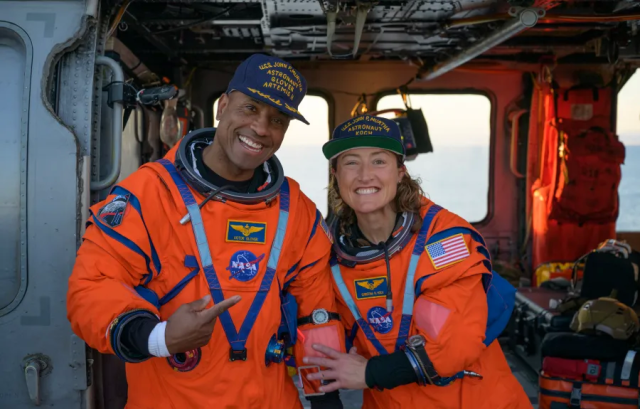
- View and download mission photographs, behind‑the‑scenes videos, podcasts, and more.
Moonbound: For All Humanity Series (and more) videos
- With Artemis II on the horizon, four astronauts transition from years of training to mission-ready reality. The latest episode explores the physical and mental challenges of preparing for a crewed flight around the Moon, and the teamwork required to test new systems at the edge of exploration.
- This page hosts a growing collection of authentic sounds recorded during NASA’s Artemis campaign as humanity returns to the Moon. All audio files are free to download and cleared for use in accordance with NASA’s media usage guidelines. This library will be updated regularly as new mission audio becomes available.
- Copy, Moon Joy can be found on YouTube.
Moon Activities with Your Audience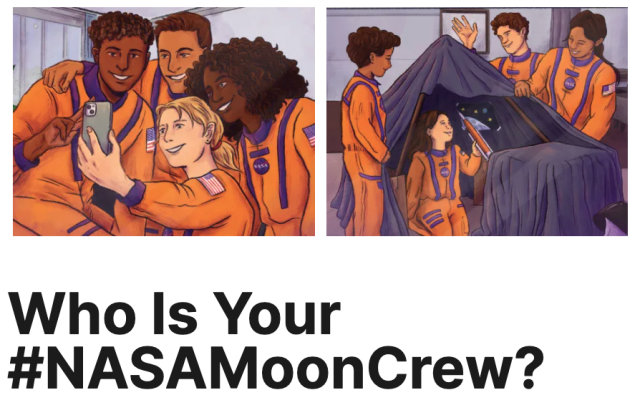
-
Choosing a crew for missions to the Moon requires the right mix of skills and attributes. All four astronauts not only bring different strengths and expertise to the mission, but they also must work well together in high-pressure situations. Discuss who you would choose to go with you on a trip around the Moon. Who is driving? Who is bringing the snacks? Who is making the Moon-trip playlist?
Observe the Moon Like an Astronaut
- Visitors step into the role of Artemis II astronauts, using real NASA imagery to study the Moon’s surface, identify features, and simulate astronaut observations. This activity can easily be adapted to making observation of your site.
International Observe the Moon Night
- Each year, observers around the world come together to celebrate Earth's Moon through direct observations, hands-on activities, lunar-themed music, artwork, readings, and more.
-
NASA's interactive map for observing the Moon each day of the year with tips on naked eye, binocular, and telescope observing.
Color-a-Pixel Activity - and Pre-generated Activities
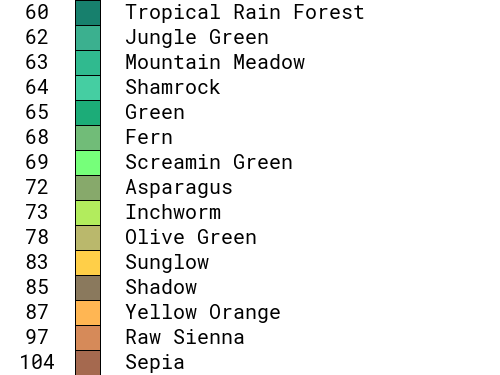
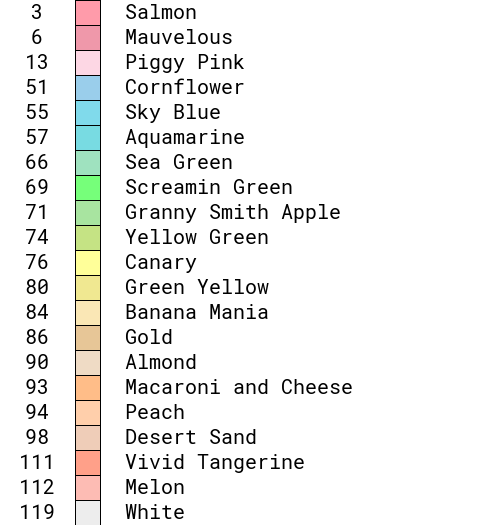
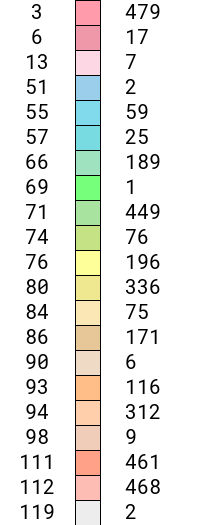
- Start with an image of your choosing, and run it through the web-based activity generator tool. The tool will aggregate the original image pixels and remap the colors to the closest-fit colors in the standard 120-color Crayola crayon palette.
- The near-side and far-rise lunar elevation comparison files are available in the pre-generated activities.
- Access the trainiing-specific Color-a-Pixel files here
- Full Moon programs or cloudy nights are great opportunities to discuss other moons in our solar system!
- Moons of the Solar System Lithograph - NASA features images of selected moons in the solar system with their relative sizes. The back of the lithograph has general information, significant dates, and interesting facts about the moons of Earth, Mars, Jupiter, Saturn, Uranus and Neptune.
- Dragonfly, the first-of-its-kind rotorcraft to explore another world, will fly to various locations on Saturn’s moon Titan and investigate the moon’s habitability.
- This tool from Sky & Telescope shows the positions of Jupiter's four Galilean satellites — Io, Europa, Ganymede,and Callisto — in orbit about the planet for any date and time from January 1, 1900, to December 31 2100.
The Sun
.jpg?w=5438&h=3638&fit=clip&crop=faces%2Cfocalpoint)
- Have you ever wondered about what the Sun is made of? Or why do you get sunburned on even cloudy days? NASA’s new Explore the Sun toolkit brings the wonders of solar science to you, offering answers to these questions and more!
Journey Through the Heliosphere: The Sun-Earth System in Color
- This coloring book that blends art and science, making complex heliophysics concepts accessible to audiences of all ages. A significant feature of the book is its inclusion of Alaska Native languages, providing words related to the Sun and sky.
- The PUNCH Outreach program activates the theme of Ancient & Modern Sun-watching to enhance the personal relevance of NASA heliophysics for all American citizens in the US Southwest and beyond.
- Are you ready to learn more about an astonishing NASA mission to swoop closer to Sun’s surface than ever before? This is a collection of outreach activities and programs are designed help you explore, create and share the experience of Parker Solar Probe and the wonders and mysteries of our closest star, the Sun.
Cloudy Program Resources
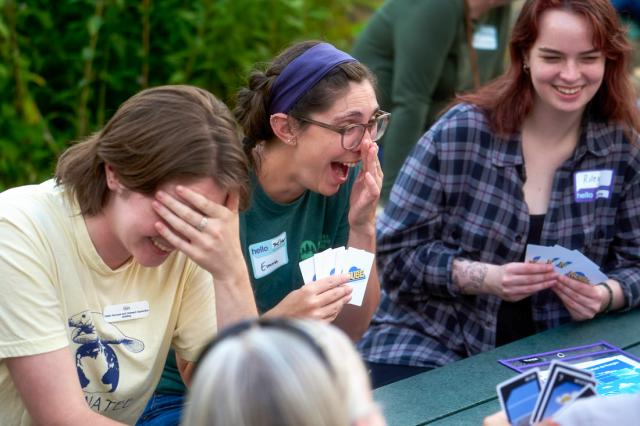 NUBE, a GLOBE Clouds game
 - Practice your cloud identification skills with NUBE, a new card game from GLOBE Clouds.
- OSIRIS-REx is the first U.S. mission to collect a sample from an asteroid. It returned to Earth on Sept. 24, 2023, to drop off a capsule with material from asteroid Bennu. After dropping off the sample capsule through Earth's atmosphere, the spacecraft was renamed OSIRIS-APEX and sent on a new mission to explore asteroid Apophis in 2029.
- Utah Specific: OSIRIS-REx Prepares to Return Asteroid Sample - NASA Science
Nancy Grace Roman Space Telescope - NASA Science
- Named after NASA’s first chief astronomer, the ‘mother of the Hubble Space Telescope,’ the Nancy Grace Roman Space Telescope will have a field of view at least 100 times larger than Hubble's, potentially measuring light from a billion galaxies in its lifetime. This observatory will also be able to block starlight to directly see exoplanets and planet-forming disks, complete a statistical census of planetary systems in our galaxy, and settle essential questions in the areas of dark energy, exoplanets, and infrared astrophysics.
- Educational Activity Center - NASA Science contains hands-on activities, printables, and models.
- ROMAN LAUNCH RESOURCES | NASA's UoL contains a community event presentation with script and additional background information that can be used for programming.
- NASA SVS | Nancy Grace Roman Space Telescope Field-of-View Zooms
- Roman Community Events
- People in America VOA's video with Nancy Grace Roman
3D Prints & Sonifications
- 3D Resources - NASA Science
- The 3D Resources hub stores 3D models related to NASA's various missions. Some of these models are 3D printable! All of these assets are free to download and use.
- A Universe of Touch and Sound - Chandra X-ray Center
- Despite our limited abilities to travel to distant objects in outer space that can be thousands of light years away - if not millions or billions of light years away - astronomers, computer scientists, and other specialists are developing 3D models of the stars with data from NASA’s Chandra X-ray Observatory, Hubble Space Telescope, Spitzer Space Telescope, and other telescopes. 3D modeling and printing objects in our Universe offers a unique tool to understand scientific data.
- There are two kinds of 3D printable objects in this section. The first is a set of specially-developed fully 3D models, and the second is a set of tactile plates that are developed as relief maps of images to help make the 2D data more experiential.
- Much of our Universe is too distant for anyone to visit in person, but we can still explore it. Telescopes give us a chance to understand what objects in our Universe are like in different types of light. By translating the inherently digital data (in the form of ones and zeroes) captured by telescopes in space into images, astronomers can create visual representations of what would otherwise be invisible to us. But what about experiencing these data with other senses, like hearing? Sonification is the process that translates data into sound.
- A Touch of the Universe
- The project, led by the Astronomical Observatory of the University of Valencia, is designed primarily for students, but can be used with the general public (such as the planetarium show, for example). The materials included in the kit are about basic astronomy, suitable as educational material in primary and secondary school. This kit includes materials that make it easier to explore the night sky with visitors who are blind or have visual impairment.
- Resources available in Spanish, Valencian, Italian, and English
Bluff Session Recordings/Resources
Solar Science: Resources for the Daytime
- This session explores the impact of the Sun by bridging modern astrophysics with the ancestral archaeoastronomy of the American Southwest. Participants first learned how light travels across the electromagnetic spectrum, allowing scientists to use complementary space telescopes and spectrographs to identify specific cosmic elements. The presentation then emphasizes safe solar observation techniques, using pinhole projection and sunspotters.
Earth to Sky Presentation & Recordings
The Search for Dark Energy Answers with the Roman Space Telescope
- NASA’s Nancy Grace Roman Space Telescope launched at the end of August! Traveling a million miles away and orbiting the Sun, Roman will settle essential questions about dark energy, exoplanets, and astrophysics. Come learn about this amazing mission, its goals, and how you can share in the excitement with Outreach Lead Peter Sooy!
Fly Me to The Moon: Astrobiology & the Moon
- What happens when humans bring microbes to the Moon's surface? Prabal Saxena explains that humans are inherently "messy" because we carry trillions of bacteria and millions of microbes per square centimeter on our skin. He connects this research to "Leave No Trace" principles, emphasizing that sustainable lunar exploration requires understanding and tracking how human presence affects pristine environments. This presentation is designed to be accessible to interpreters without microbiology or space science backgrounds.
Bring International Observe the Moon Night to Your Audience
-
Caela Barry, Science Outreach Coordinator with NASA Goddard's Solar System Exploration Division, shares how to get involved with the International Observe the Moon Night event and resources to explore with your audience! This webinar is tailored to the Earth to Sky community of place-based educators and interpreters.
- Ari Koeppel's presentation celebrates five years of NASA's Perseverance rover on Mars by weaving together three interconnected themes: using Mars as a gateway for building scientific thinking, sharing the latest discoveries from Perseverance, and connecting Martian geology with similar places on Earth. By connecting familiar Earth landscapes to Martian geology, he demonstrates how planetary science enhances our understanding of universal geological processes.
Landscapes on Other Worlds - Mountains, Volcanoes, & Sand Dunes
- Caela Barry's presentation is valuable for any interpreter or educator that works in an outdoor setting. Caela takes viewers on a tour of the solar system, highlighting similarities between landscapes found in public lands around the US and those found on other planets. Caela also provides a foundation of lunar landscape knowledge, helpful for interpreters facilitating Moon programming.
100 Things to See in the Night Sky
- Astronomer and author Dean Regas takes us on an inspiring journey through the night sky, sharing his passion for making astronomy accessible to everyone—regardless of formal training.
Listen to the National Association of Interpretation's What's Up Interpreters? podcast episode "To the Moon & Back" with Brandi Stewart, ETS Space Science Coordinator.
Utah Specific Color-a-Pixel Files
Bears Ears Elevation


- Original Color
- Solution Preview
- Recolored Image
- Named Legend
- Frequency Legend
- Poster PDF
- Multi-page Handout PDF


Bluff/Blanding/Monticello/Farmington Light Pollution


- Original Color
- Solution Preview
- Recolored Image
- Named Legend
- Frequency Legend
- PDF with Black Pre-Colored and Roads
- Simple Poster PDF
- Multi-page Simple Handout PDF


Mars Outflow Channel Elevation
Kasei Valley, one of the largest ancient catastrophic outflow channel systems


- Original Color
- Solution Preview
- Recolored Image
- Named Legend
- Frequency Legend
- Poster PDF
- Multi-page Handout PDF